What actually happened
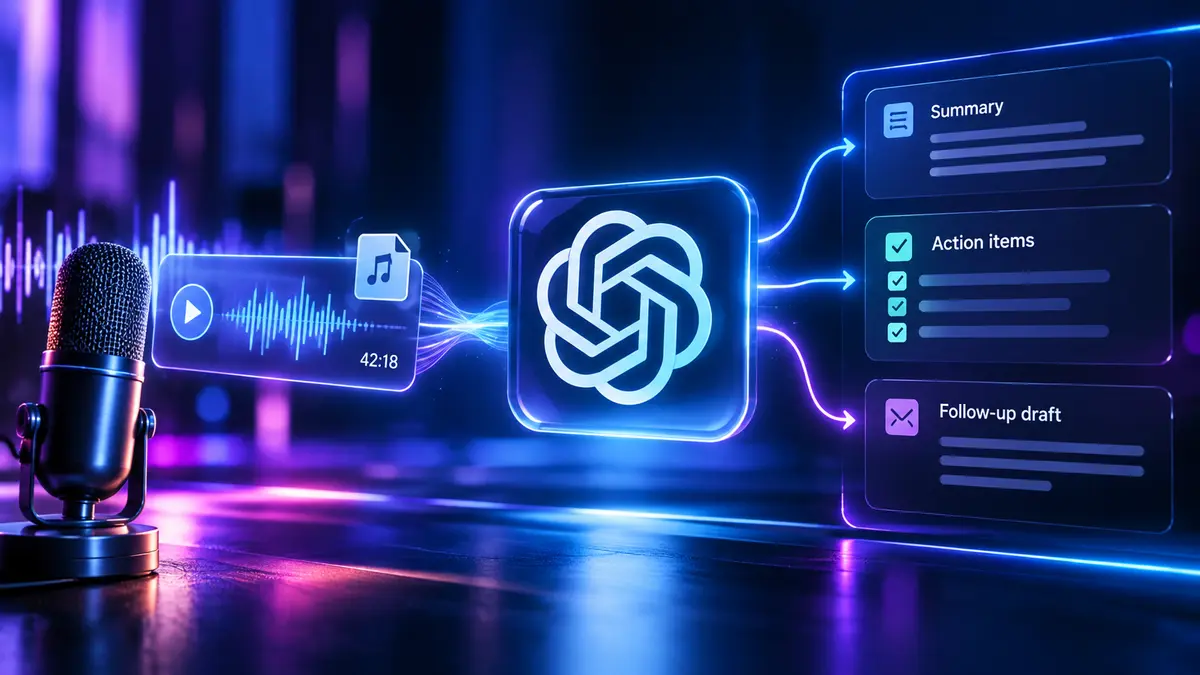
OpenAI's 6 October 2026 ChatGPT release notes confirm audio-file uploads in an ordinary conversation for supported paid subscriptions and workspaces. You attach a supported recording, then request a transcript, summary, structured meeting notes, answers about its contents or a follow-up email draft. Availability can vary by workspace settings, region, client version and model.
The important change is the route into an existing workflow. A call recording no longer has to be manually transcribed in a separate tool before ChatGPT can help draft the notes. This is file-based processing, so it should not be confused with joining a live meeting or reliably identifying each speaker without review.
OpenAI also warns that transcript accuracy varies, including across languages. A polished summary is not evidence that every statement was recognized correctly. Audio duration, encoding and the client environment can still affect processing, especially for long recordings.
Why a small team cares
Consider an independent consultant finishing a 40-minute discovery call with a local business owner. The discussion includes a website deadline, two changes to the proposal and an agreement to send sample work. Turning that conversation into accurate written commitments often takes longer than expected, and forgetting one detail can create avoidable follow-up work.
The consultant can attach the recorded call to ChatGPT, ask for a concise client-facing summary, then request a separate internal action list with owners and dates. A third request can turn the verified decisions into a draft follow-up email. That keeps research, clarification and editing in the same conversation rather than copying a transcript between apps.
The best prompt asks the assistant to distinguish explicit decisions from suggestions, flag uncertain passages and avoid inventing deadlines. This is particularly useful for multilingual calls, where names, product terms and technical abbreviations may be transcribed unevenly. Review against the recording remains necessary whenever the result will determine scope, pricing or delivery obligations.
Hype vs useful
Native uploads remove a step for teams already paying for ChatGPT. They do not make an audio summary authoritative. Speaker attribution can be wrong, an unclear number can be normalized into a confident-looking figure and a tentative suggestion can become a fabricated commitment. For consequential details, listen to the relevant section again before sending the email.
Permission and retention are also part of the workflow. Use recordings that you were allowed to create and process, and check your workspace's policies before uploading client or employee conversations. OpenAI's release notes establish paid-plan availability, not a universal guarantee that every account, region or file will behave identically.
There is no need to subscribe to a dedicated meeting agent solely to test this feature. If you already have a reliable live transcription system with CRM syncing, keep it. If your practical bottleneck is turning occasional recorded calls into accurate action lists, native audio upload is a straightforward addition to the process.