The time sink in small-business marketing is rarely one email. It is deciding what to send, adapting the offer to several channels, checking the details and making sure the campaign actually goes out.
What actually happened
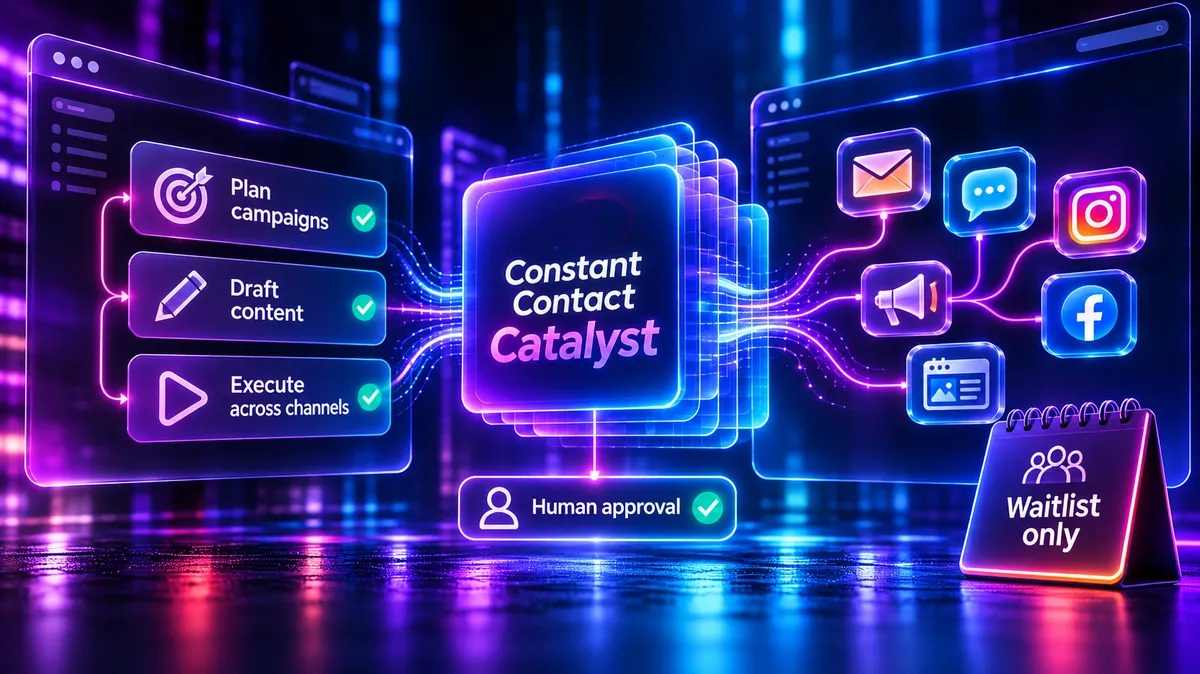
Constant Contact introduced Catalyst at its GURU Conference on November 12. The company describes an AI marketing agent that learns about a business from its digital presence, proposes a recurring marketing plan and prepares material for email, SMS, social posts, paid advertising, websites and Google Business Profile. The owner can adjust and approve activity before publication.
Its product page also describes connecting campaign results back into later plans. That is the ambitious part: carrying a marketing job through from brief to execution and measurement, rather than generating copy in a chat window. But this is the vendor's intended workflow, not an independently measured performance result.
Catalyst is being offered through an early-access waitlist. Constant Contact has not established a public final price, full regional availability or a verified list of capabilities available to every early user. Joining the waitlist is possible now; a same-day production trial should not be assumed.
Why a small team cares
Consider a local cleaning business running a December promotion. The owner might normally write a customer email, prepare Facebook and Instagram versions, check the offer on the website and remember to update the Google business listing. Even basic consistency takes hours when those tasks live in different screens.
A useful operator would assemble those pieces around the same offer, retain the correct booking URL and audience, ask for approval and show whether the promotion produced actual appointments. The value is fewer handoffs and less rework, not a larger volume of posts.
Human approval matters particularly for offers that include eligibility conditions or limited capacity. A misdirected SMS or inaccurate discount can consume customer trust faster than any time saved writing the message.
Hype vs useful
The company's language makes Catalyst sound like a complete outsourced marketer. The open questions are operational: can it segment customers correctly, preserve consent, avoid conflicting offers, recover gracefully from an API failure and tie completed jobs back to revenue? There is not yet enough publicly available evidence to answer those questions.
I would judge the first pilot by time from idea to approved campaign, number of corrections, target accuracy and completed bookings. An attractive campaign plan does not compensate for manual cleanup or messages sent to the wrong people. For now, this is a product to watch closely, not a platform to buy around.