What actually happened
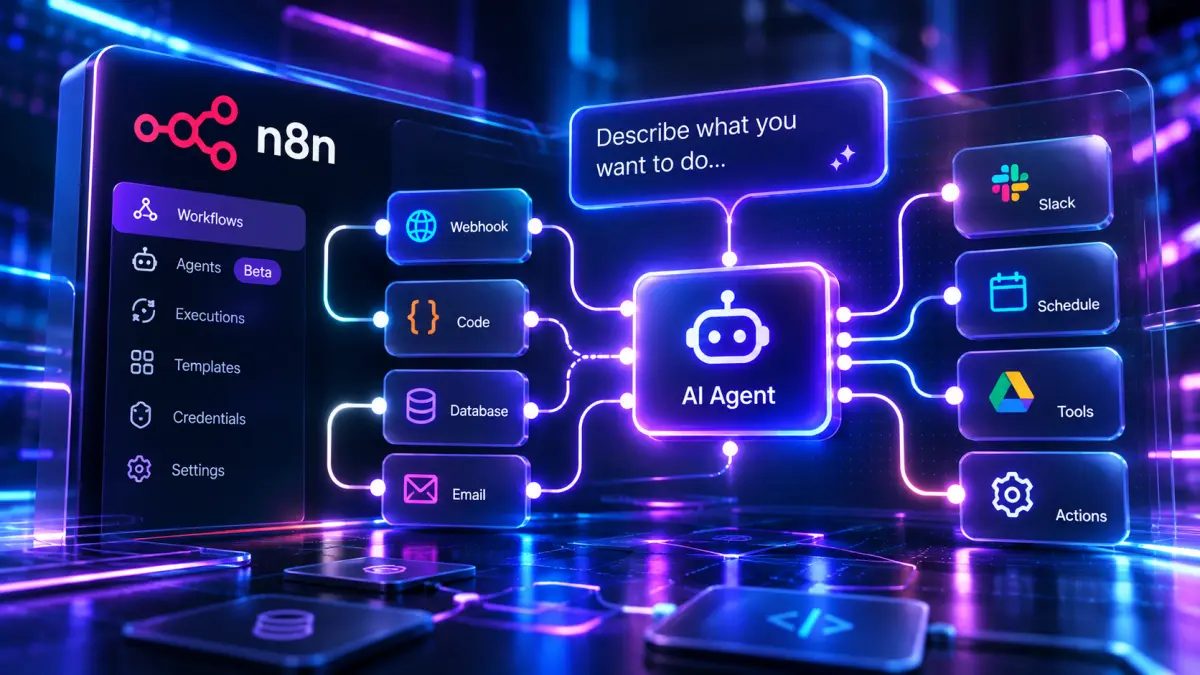
n8n added Agents as their own thing, next to workflows, not as a replacement for them. You write what the agent should do in English. You pick a model, then hand it tools: n8n integrations, MCP servers, or workflows you already built. The agent works out the steps.
The same published agent can talk in Slack, Telegram, Linear or Discord, run on a schedule, or get called from a workflow with the new Message an Agent node. Change the instructions once and every place it is connected picks up the new version.
The old AI Agent node did not change. Flows you already shipped keep running. Agents are on n8n Cloud for everyone on the latest stable version. They also run self-hosted with extra setup. They are still in preview. One turn with an agent counts as one execution and shares your workflow quota.
Why a small team cares
Fixed flows are still best when the steps never change. Lead in, enrich, score, route. Agents help when the next step depends on the last answer. A boutique agency with 40 retainers already has “get account context” and “add a CRM note” as workflows. Those stay locked. The agent only decides when to call them.
That is the cheap path from “we have n8n flows” to “someone on Slack can ask why usage dropped last month” without hiring a builder or jumping to an enterprise agent platform.
Hype vs useful
This is not a reason to rebuild your stack. It is a reason to stop forcing messy, back-and-forth work into a rigid canvas. Start small. Scope the tools. Use a test channel. Keep approvals on anything that sends a message or writes to a system of record. Publish only after you have watched a few sessions.