What actually happened
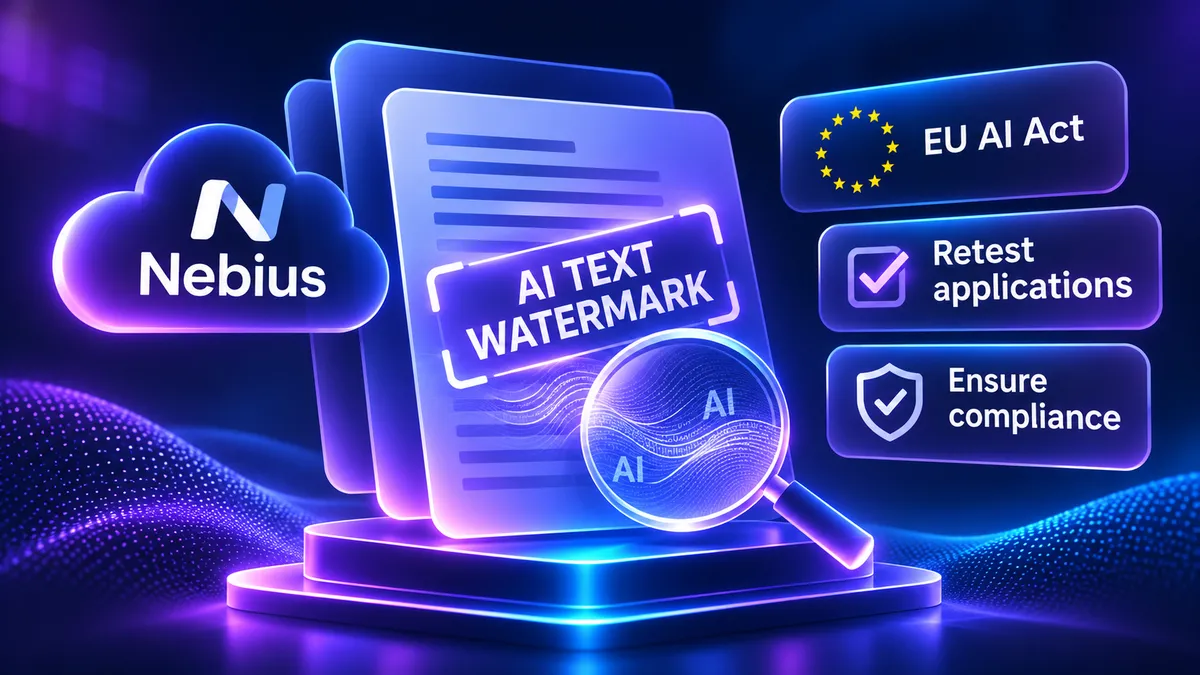
Nebius Token Factory is reportedly introducing invisible statistical watermarks into generated text between 27 November and 1 December. The reported change surfaced in customer-notice screenshots discussed on X and was also described by an inference router. We could not verify the original notice or find a public Nebius changelog confirming the rollout, affected endpoints or measured performance impact. Reported discussion on X.
The reported implementation changes token selection to create a detectable statistical pattern rather than adding a visible disclaimer. It could affect output diversity and generation speed even if the API format stays the same. No measured degradation has been established.
Why a small team cares
Consider an agency building a customer-support chatbot on Token Factory. Its acceptance tests may cover factual answers, escalation rules, response times and structured outputs consumed by downstream automations. A change to the inference process is a reason to revisit those tests, even if the model name and prompt remain unchanged.
There is also a contractual issue. Section 2.4 of Nebius's Token Factory Supplemental Terms assigns responsibility for the resulting AI system to customers integrating its API into their own products. The legal classification ultimately depends on the actual system and the AI Act, not simply the wording of a vendor contract. Nebius terms, section 2.4.
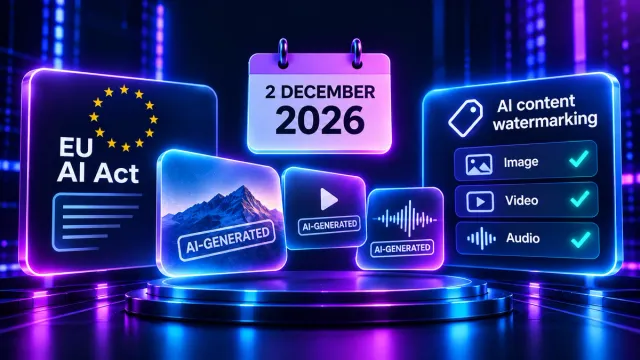
Article 50(2) requires providers of in-scope generative systems to enable machine-readable marking and detection. The transitional deadline for qualifying systems already on the market before 2 August 2026 is 2 December 2026. The European Commission's November guidance allows downstream providers to rely on suitable upstream marking mechanisms, but they remain responsible for demonstrating compliance. European Commission Article 50 guidance.
Hype vs useful
A watermark is not the same as telling a customer they are talking to a chatbot. Direct interaction disclosure is a separate requirement, and ordinary product copy or emails do not automatically require a visible AI label under Article 50(4). That provision covers certain public-interest text, subject to exceptions including human editorial review and responsibility. Standard editing also has a specific exemption from the marking requirement.
Moving to self-hosted models might give an agency more control over inference, but it does not remove its applicable legal duties. The practical issue is whether the upstream marking works in the delivered application, whether detection is available and whether quality remains acceptable. Until Nebius confirms the scope, treat the reported rollout as a reason to test, not evidence that production outputs have already changed.