What actually happened
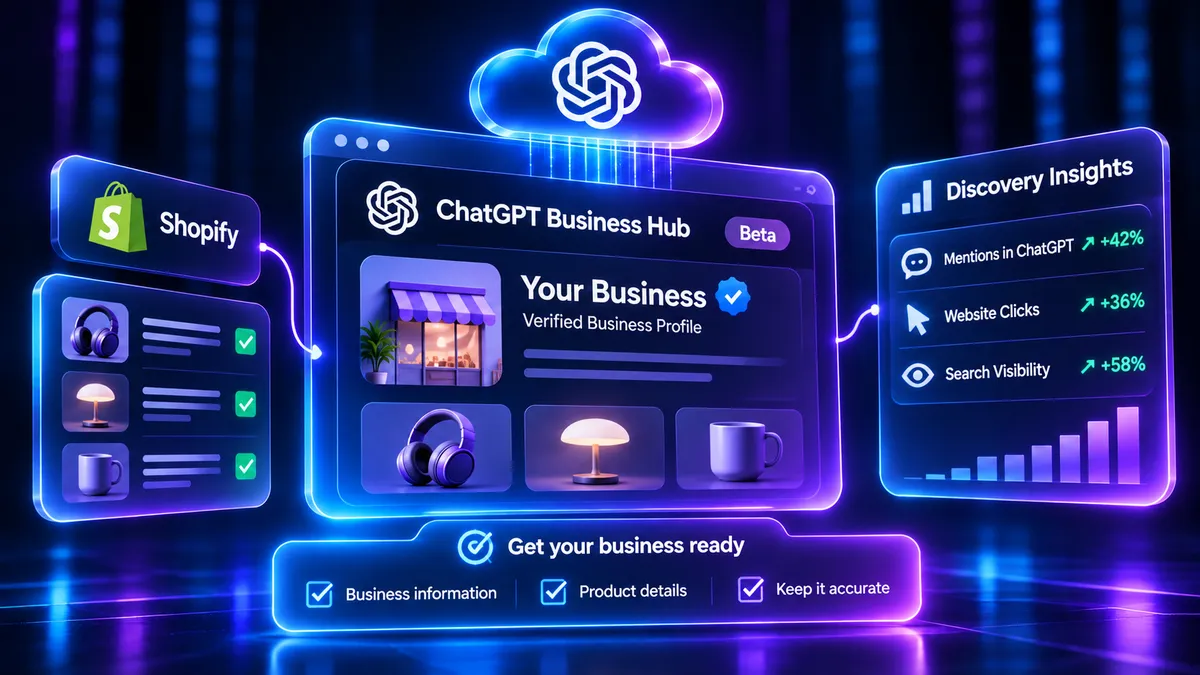
Until now, measuring how a store appeared in ChatGPT meant stitching together referral traffic, manual searches and external monitoring services. On 10 November, OpenAI introduced a new source of information directly inside its own platform. The Businesses in ChatGPT beta includes Business Hub, where an eligible company can establish ownership of its profile and maintain the details customers see.
Verified businesses can supply product data, including current prices and stock status. Shopify merchants have a connection path through their store or Business Hub. The dashboard reports aggregate mentions, website clicks and themes associated with discovery. Businesses can only see insights once the activity meets OpenAI's privacy thresholds; they cannot inspect individual conversations.
Why a small team cares
Consider a Shopify store selling specialty running accessories. If customers are researching gifts for marathon runners, the store might appear in ChatGPT answers because of its product pages or buying guides. Discovery topics could indicate which questions bring the brand into those conversations. That is a useful signal for deciding whether to improve a sizing guide, product description or delivery information.
A mention is not a sale, though. Compare the dashboard's clicks with your own website analytics and orders. A month with more mentions but no additional revenue may simply reflect wider research-stage exposure. The value is having another observable discovery channel, rather than attributing an order to a conversation you cannot see.
Hype vs useful
OpenAI also introduced Business Agents for eligible US ecommerce and online service companies. These use information supplied by the business to answer questions in a clearly identified conversation. That is a different capability from claiming a profile, and it is not yet a general entitlement for merchants in Europe.
The most useful feature today is the combination of accurate information and direct measurement. Verification does not buy preferential recommendations, and a small store may not generate enough activity for immediate analytics. Treat missing data as insufficient evidence, not zero visibility. The underlying job remains making it easy for customers and discovery systems to understand what you sell and whether it is available.