What actually happened
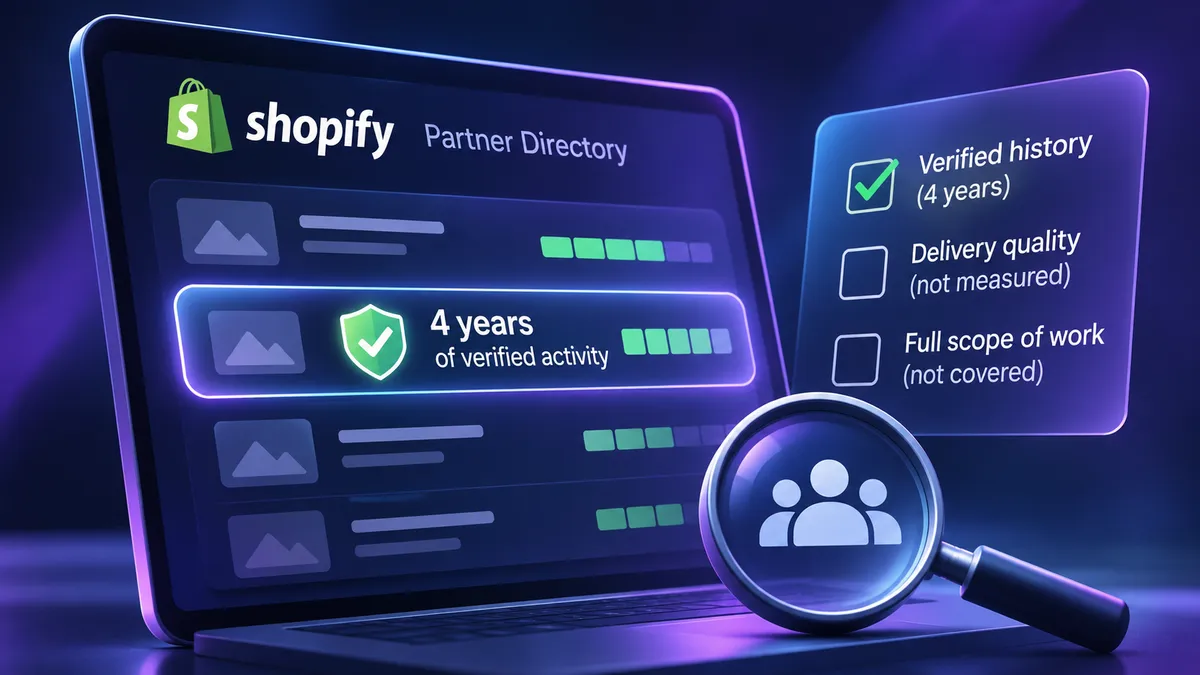
Shopify redesigned its Partner Directory so agency profiles draw on Shopify's own records of partner activity in client stores across the previous four years. Profiles now present comparable information about industries served, services provided, geographic markets, partner tier and time in the partner program. Merchants can browse those fields rather than relying entirely on a partner's self-written claims.
Shopify also added examples of partner work to the directory home page and standardized the way profiles are compared. Search results are listed alphabetically, according to the changelog. The update makes the directory a stronger evidence source for finding relevant experience, not a ranking of the best-performing agencies.
Why a small team cares
Imagine a merchant looking for a small agency to migrate a catalog, connect inventory and improve a Shopify storefront. Two agencies may claim the same capabilities. A verified record that one has worked across similar stores and markets is a useful first filter, especially when a buyer cannot assess technical portfolios in detail.
The reverse is also true. A capable team that has spent much of the last four years building WooCommerce sites, custom integrations or Shopify work outside Shopify's recorded partner activity may present a thinner profile. It can look less experienced than a larger agency with more directly visible store history. That difference reflects the measurement window, not necessarily the team's competence.
Hype vs useful
The word verified should be read precisely. Shopify is verifying records of activity inside its ecosystem. It is not independently grading project profitability, delivery speed, code quality, support responsiveness or client satisfaction. Partner tier and tenure are context, not a substitute for references. Nor does the directory tell a buyer which individuals will actually do the work.
For an agency, the practical response is to inspect its profile and support the recorded data with clear case studies, especially when substantial experience falls outside the four-year window. For a merchant, the new fields improve shortlisting. The hiring decision still belongs in a conversation about comparable projects, a named delivery team, written acceptance criteria and what support looks like after the store goes live.