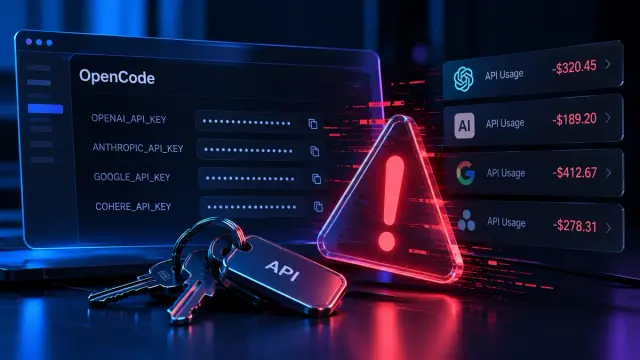
A restored deploy button is good news for a software business. It is not evidence that a previously exposed credential has become safe. The difference matters when an AI application has billing-enabled model keys, database access and payment integrations behind a few environment variables.
What actually happened
On October 21, Railway disclosed anomalous activity in systems storing customer environment variables. Its investigation indicated an unauthorized party may have accessed encrypted variables and, in some cases, decrypted contents. Railway said the potentially affected data could include API keys and database or registry credentials. The company advised all customers to rotate stored secrets while the investigation continues.
Railway temporarily paused deployments, complicating that response. Its October 23 status update says builds and deployments are operating normally again across Enterprise, Pro, Hobby, Trial and Free workspaces. Railway is working on a preliminary incident report; new signups remain paused. The company has not established in the cited disclosure that every customer's secrets were exposed.
Why a small team cares
Imagine a two-person software business running an AI-powered customer support tool on Railway. The service has a database password, an LLM provider key and a webhook signing secret. Even if the application itself has not changed, possession of one of those credentials could give an attacker a separate route to make paid requests, query records or impersonate an integration, depending on the credential's permissions.
The interruption made incident cleanup harder because replacing a value in a dashboard is not enough when the deployed application has not picked it up. With builds restored, the team can complete the full loop from issuing new credentials upstream to deploying with them and confirming that old values no longer work.
That verification matters commercially. An AI API key with high usage limits can produce a real invoice; a database credential can turn a hosting issue into a customer-data incident. The remediation cost is a bounded maintenance task. Leaving old credentials active creates an open-ended risk.
Hype vs useful
Railway has described a potential exposure, not published proof that every hosted application was breached. There is no reason to tell customers their data was stolen without evidence. There is also no defensible reason to postpone rotation until the final report, given the vendor's explicit instructions.
Rotation means revoking credentials at the issuing service and replacing their references, not simply renaming variables. Railway also reports that API and Project Tokens issued before the incident remain invalidated, so CLI and API integrations may need fresh tokens. Check access logs and unusual charges at the underlying providers, where misuse would appear.
The useful outcome is a tested deployment that starts cleanly with newly issued credentials and fails with revoked ones. A green Railway status indicator confirms platform operations, not the security state of your particular application.