What actually happened
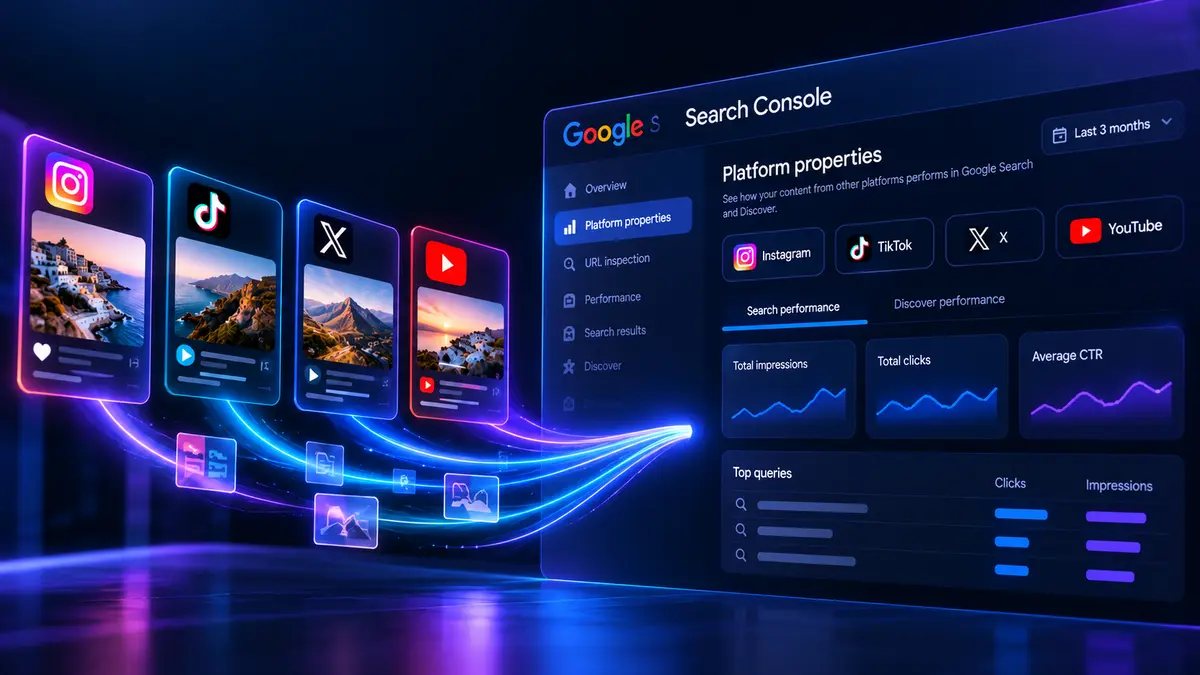
Google Search Console can now treat a social account as a platform property. Instagram, TikTok, X and YouTube creators can inspect how their posts and videos appear in Google Search and Discover, including the queries that led searchers to their content. Performance reporting includes clicks, impressions and individual posts; Insights highlights trends and discoveries, while Achievements tracks milestones.
This is a catch-up story, not a new October launch. Google announced platform properties on July 7, 2026, then confirmed global availability on July 29. Its later guidance also describes reporting across Google News. There is no need to wait for a separate EU release if the supported property option is present on the account.
Why a small team cares
Consider a solo fitness instructor posting short technique videos on Instagram and YouTube. Native analytics show reach inside each app, but they do not reliably answer which Google searches surfaced those videos. Platform properties add another acquisition view: the wording real searchers used, which posts received clicks and which content is visible beyond the platform's feed.
That distinction can guide editorial decisions. A video with modest in-app engagement might still match a recurring search question and attract visits through Google. Likewise, popular social posts may produce almost no Google visibility. Seeing both patterns helps a creator choose between making more search-focused explainers and continuing material optimized for follower engagement.
Setup happens in Search Console: select Add property, choose one of the four platforms and follow its authorization steps. Each social account needs its own property and verification. Creators without a website can use these reports too, so this is not restricted to a traditional SEO team.
Hype vs useful
These reports do not suddenly turn social-media reach into organic website traffic. A Google click to a social post, an Instagram impression and a website session are different measurements. Treat them separately in reporting, especially if you use social content to generate inquiries or sales.
Search queries are useful direction, not a guarantee of future rankings. They also do not prove that a particular post generated a customer. Attribution still requires a clear route from the post to the commercial action and suitable measurement at that destination.
The practical opportunity is straightforward: Google has exposed search-discovery data that previously required guesswork. For creators already publishing on supported platforms, connecting the property costs little and can improve content choices. The claim that this is an October rollout is outdated; the data is the story.