What actually happened
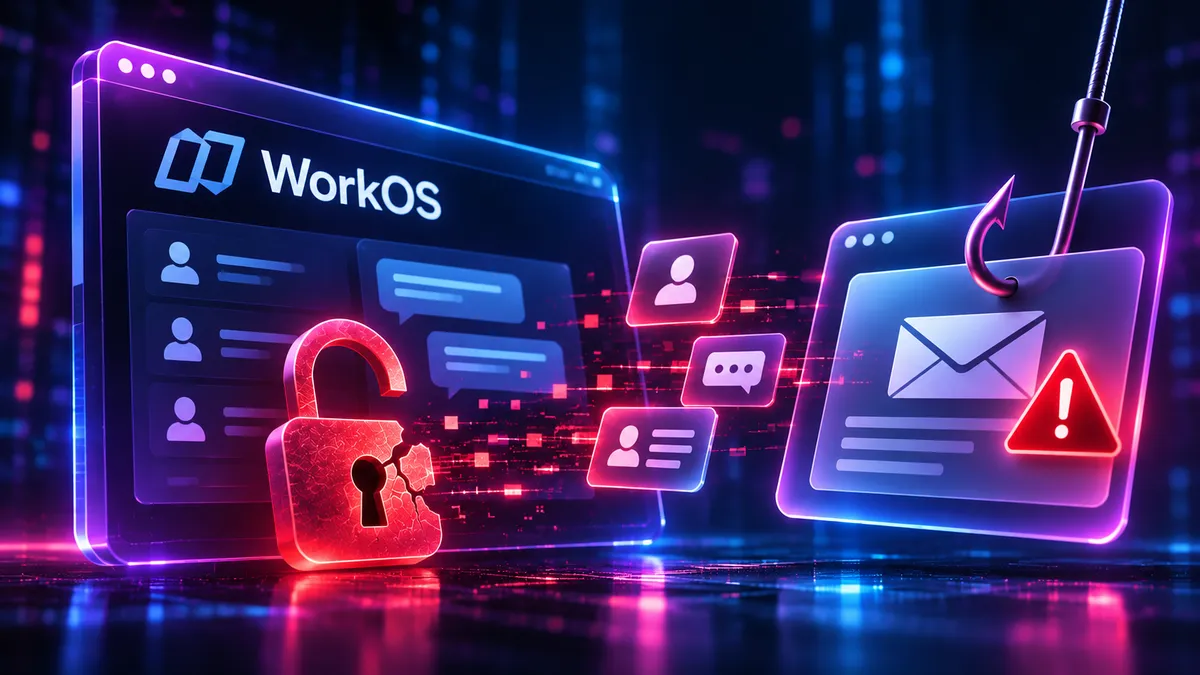
WorkOS disclosed on November 2 that an unauthorized actor accessed an internal application used by its sales and customer-facing teams on October 30. The affected tool held business contact details, account histories, customer-relationship records, and summaries or excerpts from support discussions, sales calls and customer Slack conversations. It also held operational metadata, including product usage and connection or directory health.
WorkOS says its investigation has found no evidence that customer application data or production WorkOS services were accessed or affected. It currently believes the incident was limited to CRM and customer support data. The investigation is still open, and WorkOS has not provided a confirmed count of affected customers.
The company says an AI-assisted offensive security framework was used to automate reconnaissance and exploitation attempts. Its public bulletin does not name the framework or establish whether the tooling was decisive. WorkOS has disabled external access to the affected application, engaged independent forensic specialists and plans to notify affected customers directly.
Why a small team cares
Consider a small SaaS founder using WorkOS for customer authentication. A malicious email that knows the founder's real account manager, an earlier support problem and the current state of a directory integration is more convincing than ordinary spam. Those details can make a fake request for a configuration change, payment update or login credential appear to be part of an existing conversation.
The problem is not a confirmed compromise of the founder's production sign-in system. It is that legitimate relationship context may help someone impersonate a trusted vendor or colleague. A reply in an existing-looking thread should not be treated as sufficient proof of identity when the request involves access, secrets or payments.
For a small team, one practical control matters: use a separate, previously trusted route to confirm sensitive requests. This works even when a message correctly references private details that the sender should not normally know.
Hype vs useful
The AI-assisted attack detail is notable, but it is not evidence that a specific autonomous framework bypassed WorkOS production systems. The publicly confirmed exposure concerns internal sales and support information. WorkOS has not instructed all customers to rotate production credentials, and there is no basis for treating every application as compromised.
The useful response is targeted. Watch for unusually well-informed messages, identify whether sensitive credentials were ever placed in support conversations, and rotate only those that may have been disclosed. Broader customer impact and the precise attack path still need confirmation from the ongoing investigation.