Repeated cloud deployments are a poor feedback loop for an AI coding agent. It can produce and revise code quickly, but every remote test adds setup, credentials and waiting time.
What actually happened
On 11 November, AWS released AWS Emulator, an open-source tool that answers supported AWS SDK and CLI calls on a developer machine or CI runner. It can simulate resources such as DynamoDB tables without an AWS account or live deployment. Each instance has its own endpoint, credentials and in-memory state.
Linux supports native packages; macOS and Windows can run the emulator in Docker. AWS charges no additional service fee for the emulator. Unsupported API operations return HTTP 501, and coverage varies by service and feature. AWS publishes fidelity information so developers can see which behaviors have been verified.
Why a small team cares
Take a small software agency building a customer portal backed by DynamoDB. A developer or coding agent needs to create a table, write an item, fetch it and handle errors while iterating on the application.
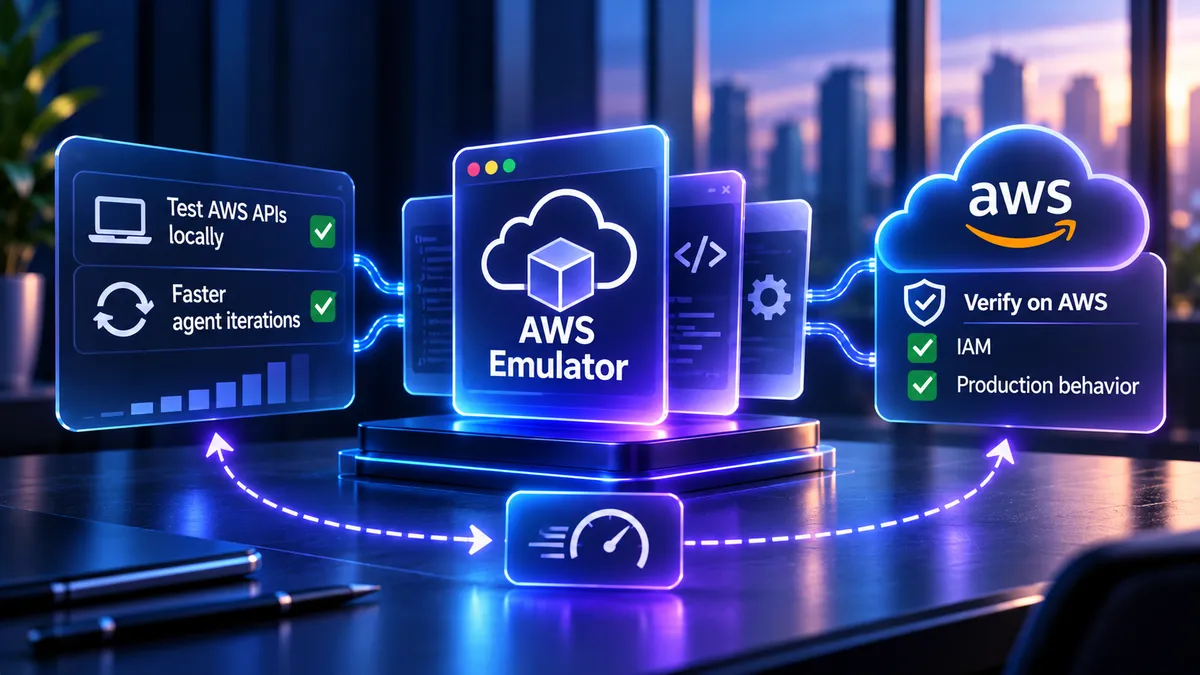
With the emulator, those tests can run against local endpoints instead of repeatedly provisioning live resources. A continuous integration job can also receive an isolated environment instead of sharing a test account with other jobs. The possible gain is faster feedback and fewer disposable cloud deployments, not a magic reduction in all hosting costs.
Hype vs useful
A successful local test does not prove the deployment will work in AWS. The emulator does not evaluate IAM permissions the way AWS does, and it does not reproduce cross-account or cross-Region behavior. Networking, quotas and performance may also differ from production.
AWS supplies fidelity tests and explicit unsupported-operation errors, which make its limits visible. That is useful for deciding whether one integration belongs in the local test suite. Use it to tighten the development loop, then verify permissions, integration and release behavior against the actual cloud environment.