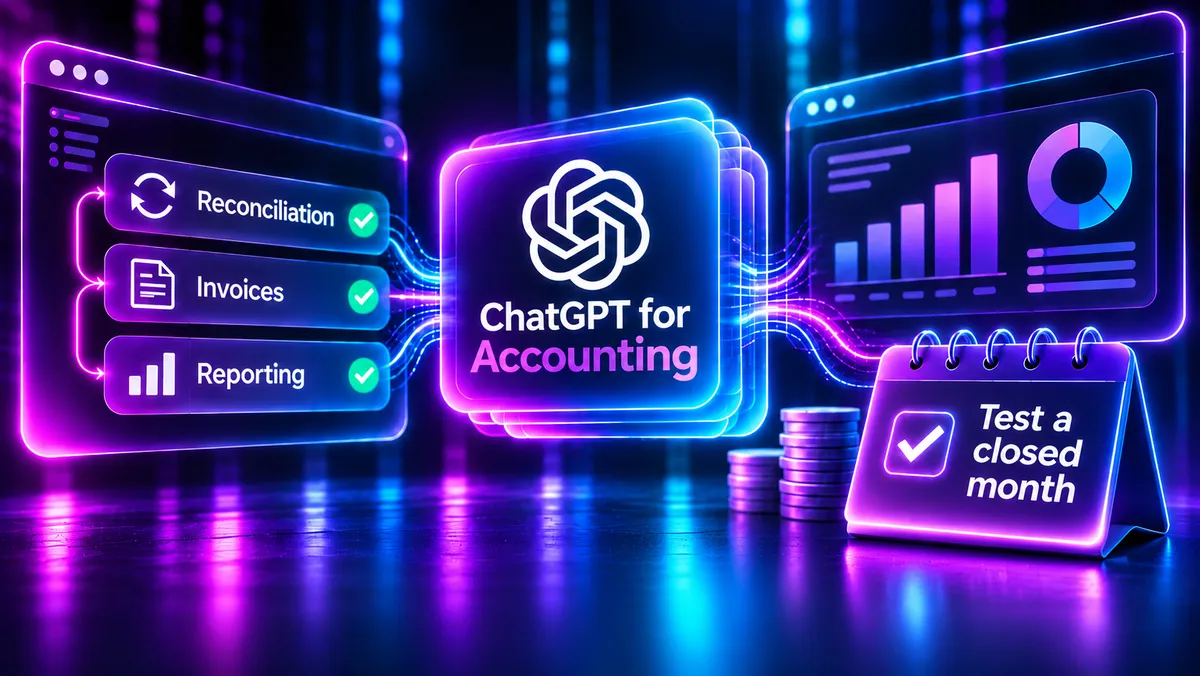
Accounting assistance is useful when it reduces the manual comparison work without introducing corrections that accountants have to untangle later.
What actually happened
OpenAI has added ChatGPT for Accounting, with an Accounting plugin and workflows for reconciling transactions, preparing invoice entries and drafting reports from connected records. Supported partner tools include QuickBooks Online, Xero, FreshBooks, BILL, NetSuite, QuickStart, Rillet and Campfire. Available actions depend on each integration and workspace configuration.
OpenAI says users can compare bank exports with ledgers, flag unmatched transactions, propose invoice coding and trace financial commentary to supporting records. These are drafts for review, not approved accounting entries. The plugin can be installed at no charge in eligible workspaces, although model access and usage depend on the plan.
Business users can install it in their workspace; Enterprise installations require administrator approval. The underlying accounting apps retain their normal permissions, so a connection able to create entries needs particular care.
Why a small team cares
Consider a consultancy receiving thirty supplier invoices per month. The bookkeeper has to connect email attachments, bank movements and accounting records, then check fees, dates, tax codes and duplicates before month-end.
ChatGPT could take over the initial comparison and surface unclear items with references to their source rows. It could also prepare management notes showing which expenses changed. The business value would come from less routine checking, not from impressive-looking generated explanations.
One wrong currency conversion or duplicated journal entry could offset the time saved. A correct match rate alone is not enough: review time and the cost of resolving exceptions matter too.
Hype vs useful
This is not autonomous bookkeeping. A model that produces plausible reports is not necessarily accurate at transaction-level reconciliation. Users must check original documents, arithmetic and classifications before any accounting system is updated.
A finished month gives you a safe benchmark. Compare the AI's proposed matches and exceptions with the approved books, then try a small invoice sample. Track incorrect matches, missed exceptions and minutes to sign-off. If the process saves material time without reducing confidence in the records, repeat the test. Otherwise stay with the current workflow.