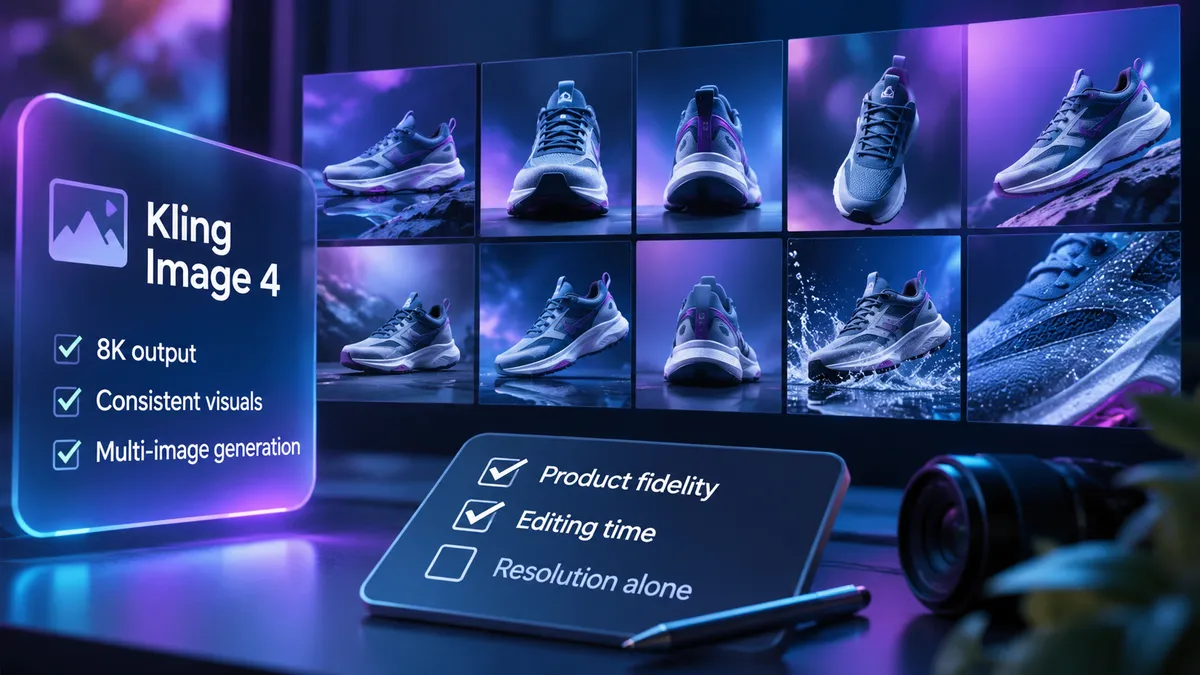
One impressive AI picture is easy to approve. Ten pictures that belong to the same campaign, preserve the product and require almost no correction are a different production problem.
What actually happened
Kuaishou introduced Kling Image 4.0 on 18 November, claiming native 8K image generation and coordinated output of up to ten images from one prompt. The company says the model can retain characters, visual treatment and layout while handling longer instructions and more accurate text and spatial details. It is available through Kling AI's Creative Studio and API.
Those are vendor claims. Kuaishou has not published independent comparisons proving that the consistency or text accuracy outperforms competing image tools for commercial production. Availability and price details can also vary by plan and region.
Why a small team cares
Consider a small cosmetics brand preparing a product launch. The same package may need to appear in a website banner, several paid social images and an email promotion. Making each creative independently introduces visual drift: bottles change shape, colors shift, labels mutate and lighting no longer feels like one campaign.
A coordinated set could reduce retouching and art direction time when the campaign is stylistic rather than a strict photographic record. The 8K output might help with crop flexibility and large-format layouts. Neither benefit matters if the model invents the product's packaging or changes legally relevant claims on the label.
An API may make draft production repeatable, but approval still belongs in the workflow. Automated delivery of unverified product images can create misleading listings and expensive corrections.
Hype vs useful
Resolution is not a business KPI. Evaluate how many of the requested images survive review without fixes, how long corrections take and whether the same product remains recognizable across formats. High resolution can make a wrong detail more visible rather than more useful.
Reference images can also affect total generation cost, so compare the actual current pricing of your chosen workflow rather than only the advertised output rate. For small advertisers, the winning setup is the one that delivers a coherent approved set faster, not necessarily the model with the highest pixel count.
If a ten-image test passes product-fidelity checks and significantly cuts editing time, expand volume gradually. Otherwise keep the current production process, even if Kling's demo gallery looks better.