A payment initiated by software still needs a provable customer authorization, a secure processing route and someone responsible when an order goes wrong.
What actually happened
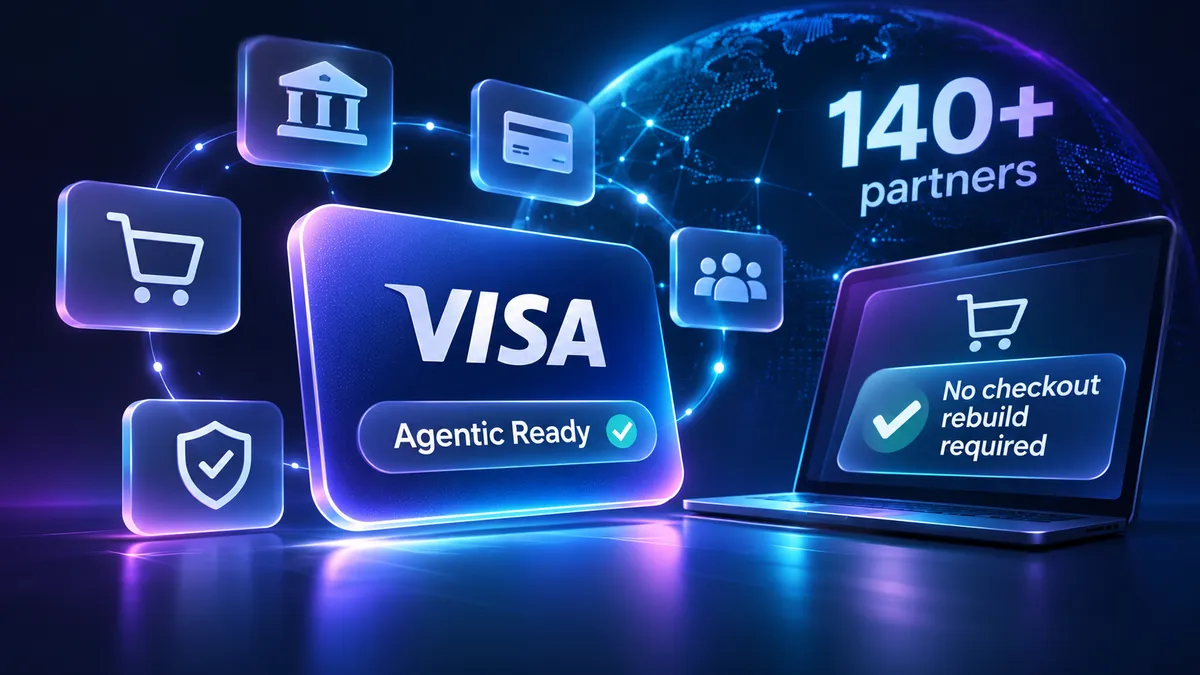
On 19 November Visa published a corrected announcement expanding Agentic Ready from issuers to the merchant acceptance ecosystem. More than 140 participants include Stripe, PayPal, Adyen, Checkout.com, Fiserv, Global Payments and J.P. Morgan Payments, alongside other commerce and payments businesses. Visa says its earlier work involves over 175 issuers across 45 markets.
The initiative lets participants test how merchants and payment providers recognize, authenticate and process transactions initiated by AI agents. The goal is compatibility with existing payment infrastructure rather than a parallel checkout network.
This is an ecosystem readiness program. Visa has not announced that every participating processor offers generally available agent-initiated checkout, nor published merchant conversion data.
Why a small team cares
Imagine a Shopify store selling office accessories. A buyer could eventually ask an assistant to find an item that meets a specification and purchase it within a spending limit. Before the payment, the agent needs correct prices, stock, delivery terms and product details.
Bad product data can stop that transaction even if the payment rail works. At checkout, the merchant still needs to know that the customer authorized the purchase and what happens after a fraud claim or refund.
For a small store, the most relevant future announcement will come from its current PSP or commerce platform, including exactly how the authorization flow works.
Hype vs useful
The headline number measures program participation, not live merchants, completed purchases or revenue generated. It does not answer operational questions about fee structures, reversals or responsibility for unauthorized actions.
There is no reason to replace a reliable checkout because providers are experimenting with new transaction signals. Continue normal card security and maintain accurate public product information. When your platform ships a supported integration with measurable orders and clear dispute handling, a small pilot may make sense. Until then, watch the rollout rather than building the plumbing yourself.