An AI shopping assistant can only recommend a product confidently if it understands what the shop sells and what actions the shop supports. Teaching the assistant to click around a changing website is a fragile way to provide that information.
What actually happened
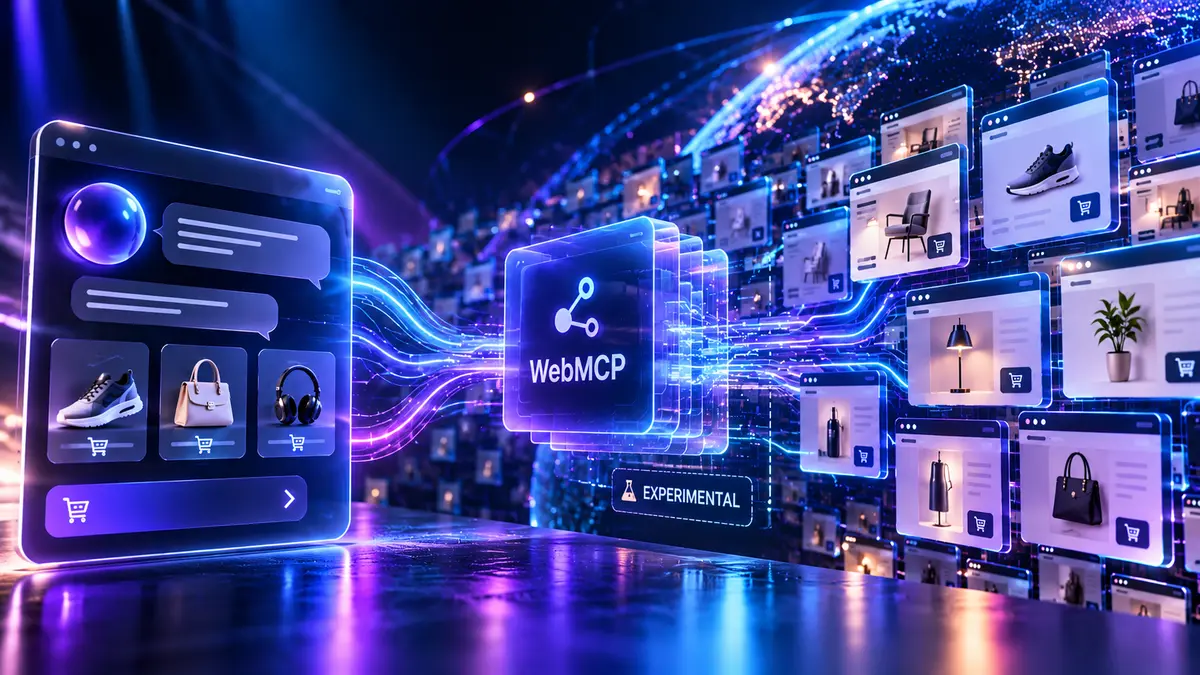
On October 21, Cloudflare described how it and Commerce.com enabled WebMCP across almost 100,000 merchant domains. WebMCP is an experimental browser-facing standard that allows websites to publish structured functions to compatible agents. These can include product search, product-detail access and cart-related operations instead of requiring an agent to interpret pages and simulate clicks.
Cloudflare's edge implementation injects a bridge script and connects available tools to Commerce.com's backend MCP service. Commerce.com enabled the feature across its storefront network while giving individual merchants an opt-out. Unsupported browsers and unavailable MCP endpoints fall back to the regular storefront experience.
This is a deployment across Commerce.com domains using Cloudflare infrastructure. It is not a claim that 100,000 Shopify or WooCommerce merchants have independently installed WebMCP. Browser availability is still limited to experimental Chrome settings, origin trials and certain agent environments.
Why a small team cares
Take a small specialist footwear shop. A customer asks an assistant for waterproof hiking shoes in a particular size, under a fixed budget, available for delivery this week. An ordinary browser agent must find filters, interpret product tiles and hope it does not click the wrong variant. Structured tools can instead return machine-readable product results and cart operations with explicit parameters.
That could reduce navigation errors and the maintenance burden for stores where themes, pop-ups and layouts change frequently. It also gives a platform a cleaner place to enforce rules about permitted actions and merchant settings. But the shop still needs accurate catalog data and reliable inventory. Structured access simply makes bad data easier to consume at scale.
For the merchant, the commercial test is whether the agent chooses the correct product and variant, and whether the customer completes a purchase. More technically impressive tool calls are not evidence of incremental sales.
Hype vs useful
The number of domains demonstrates that a platform can deploy agent interfaces centrally. It says little about how many customers currently use compatible agents or whether the feature increases conversion. Cloudflare calls WebMCP experimental, so it is premature to treat the mechanism as a universal ecommerce requirement.
There is also a meaningful boundary around checkout. The launch supplies discovery and cart tools, but does not establish that an independent agent can complete purchases without shopper involvement. Payment authorization, fraud checks, stock reservation and order confirmation remain the merchant's responsibilities.
What I would validate first is the failure path: how does the site behave when the agent is unsupported, the tool endpoint is unavailable, or a product goes out of stock? A system that preserves the normal shopping experience while exposing accurate tools is worth testing. A custom integration with unclear buyer demand is not yet worth a platform migration.