The expensive part of a sales call is not always the meeting. For a solo consultant it is the follow-up: translating a messy conversation into a clear scope, price and next action while the next appointment is already starting.
What shipped
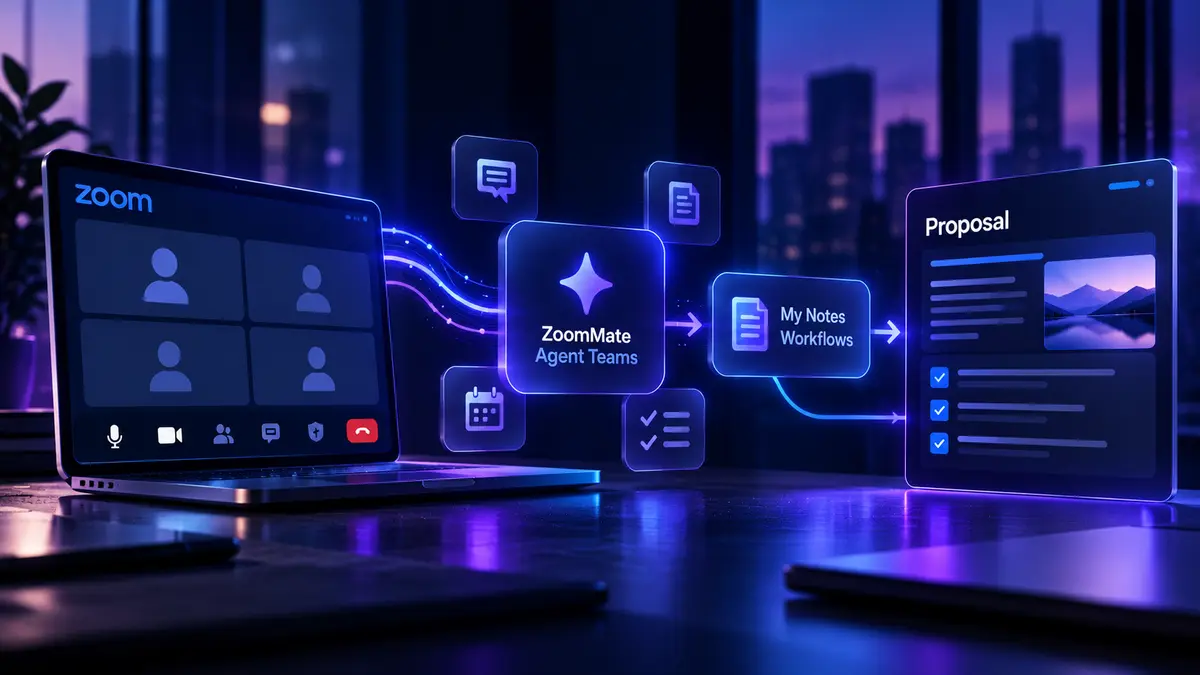
At Zoomtopia on October 20, Zoom announced a Unified Context Layer joining information from meetings, phone, chat and connected business applications. Its agentic search is available now, alongside ZoomMate Agent Teams, which coordinate specialized agents working on different parts of a task for human review.
Zoom for Business Owners is also available now and can work with Bonsai to help draft client proposals and organize related work. My Notes Workflows, intended to send meeting output into services such as Zoom Chat and Salesforce through templates or natural-language instructions, are expected in October 2026. The standalone My Notes mobile app is a separate feature expected in December.
Why a small team cares
Take a freelance web consultant handling a discovery call with a local retailer. The client asks for a product catalog, basic checkout, shipping setup and a training session. Normally the consultant reviews notes, writes the proposal and checks that the quoted work matches the conversation. A connected Zoom and Bonsai flow could produce the first draft while the meeting details are fresh.
The benefit is not that an AI agent can write polished paragraphs. It is whether the system extracts the correct deliverables, dependencies and unresolved questions, then places them in the tool the consultant already uses. Missing a requirement such as multilingual checkout or ongoing maintenance could turn a quick proposal into an unprofitable contract.
A useful workflow therefore separates the mechanical work of transferring and structuring notes from the commercial judgment of defining scope and setting price. That distinction also makes it easier to determine whether the feature is genuinely saving time.
Hype vs useful
Zoom describes a broad future in which agents coordinate project work across many systems. That is a vendor promise, not evidence that a particular solo business can safely automate proposals end to end. Product availability, connectors, account permissions and the quality of the meeting transcript will determine what is possible today.
I would assess it using one real call: did it capture the actual requested work, flag ambiguities, respect the customer's budget and produce an editable proposal? Count the time spent correcting the document. If that correction is as costly as starting from scratch, automation has only moved the admin burden.
Client conversations may include personal information and sensitive commercial terms. Before allowing automatic write actions into CRM or billing software, establish which systems receive meeting content and who may approve the resulting actions. For now, a reviewed proposal draft is a much better business outcome than an autonomous but incorrect offer.