What actually happened
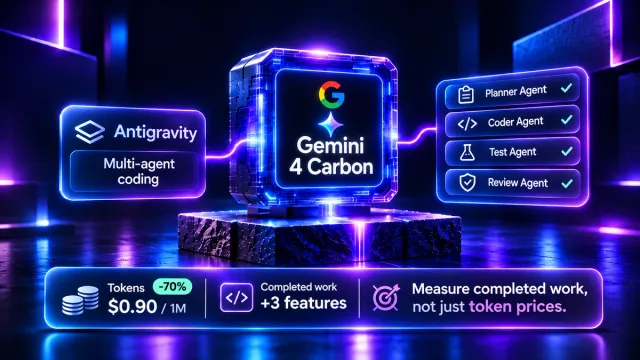
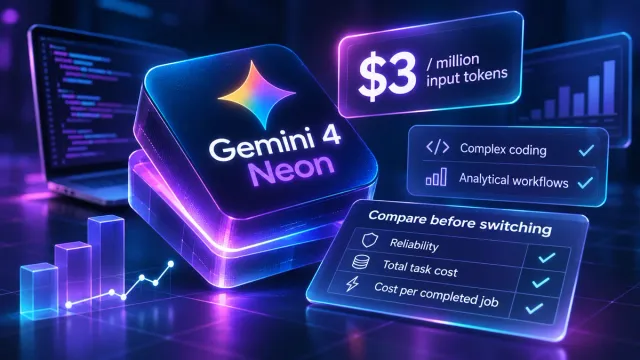
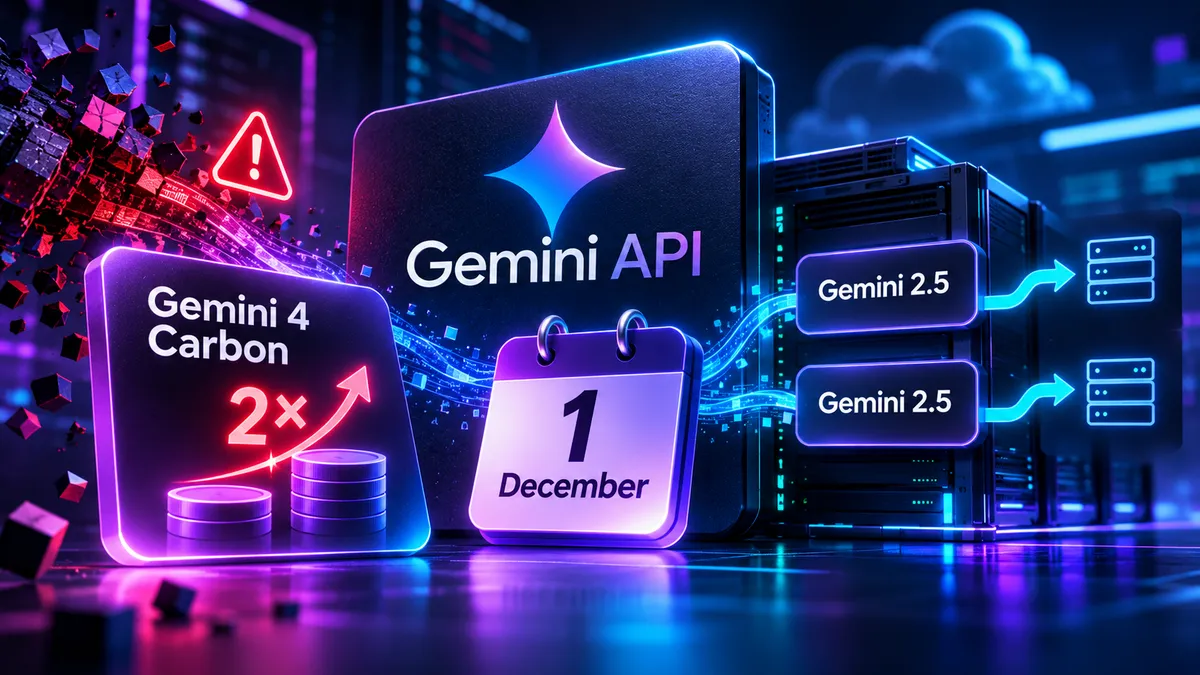
Google ends Gemini 4 Carbon's introductory Gemini Developer API pricing on 30 November. On 1 December, standard input rises from $2 to $4 per million tokens, output from $10 to $20, and cached input from $0.10 to $0.20. Gemini 4 Neon is available at $3 per million input tokens and $15 per million output tokens.
That day, calls to gemini-2.5-pro start routing to gemini-3.8-flash, and calls to gemini-2.5-flash start routing to gemini-3.5-flash-lite. Google bills the inference at the destination model's rates. Your app can keep sending the old model ID while a different model does the work. Google's migration notes.
Why a small team cares
An agency extracting figures from monthly client PDFs might use 10 million uncached Carbon input tokens and 1 million output tokens in a month. At standard rates, those tokens cost $30 in November and $60 from December with the same workload. Storage and other separately priced features sit outside that calculation.
An extraction workflow still using a 2.5 ID faces a different risk. The replacement can produce different values or reject parameters the old model accepted. An HTTP success tells you the call returned. It takes a comparison with known totals to tell you whether the client report is still right. Include the unusually long PDFs and the reports with missing fields. Those are the runs that can send the workflow into retries or manual cleanup.
Hype vs useful
File slicing can reduce billable input when a workflow only needs certain PDF pages, spreadsheet ranges or media segments. If the figures always sit in an appendix, pass the relevant page range and check the input-token count. If the figures could appear anywhere, the selection step adds a failure mode that can cost more to fix than the tokens you saved. Gemini API file-slicing notes.