What shipped
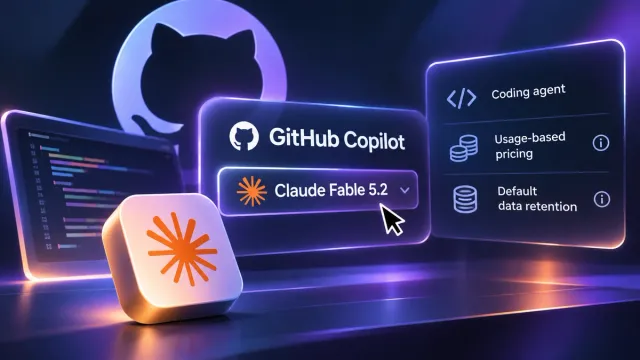
Google expanded Gemini 4 Carbon access on 10 November, positioning it for difficult reasoning, engineering and longer agent runs. It is available through the paid Gemini API and AI Studio, with rollout into eligible Google products including Antigravity for Google AI Ultra users. GitHub also announced gradual availability in Copilot Pro+, Max, Business and Enterprise, billed at provider list pricing under usage-based billing.
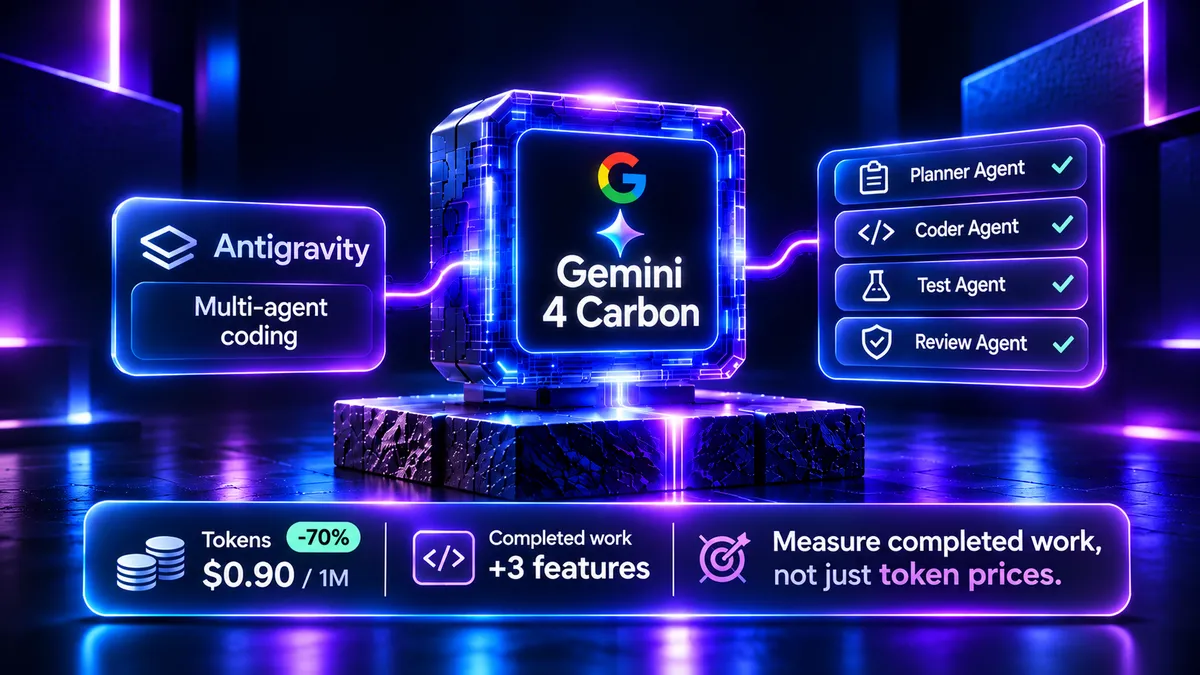
The public API's introductory rate is $2 per million input tokens and $10 per million output tokens. After 30 November, those prices become $4 and $20 respectively. Google also says its Argon model remains the preferred choice for most ordinary engineering and knowledge tasks. Carbon is designed to spend more tokens on deeper reasoning and extended checks.
Why a small team cares
Consider a web agency with a broken payment integration spanning a frontend, an API and a database. The team has already spent two hours chasing a race condition. A more capable agent could trace the request path, identify where state becomes inconsistent, and propose a patch plus regression tests. If Carbon gets a reviewed fix in one run where the existing model requires several, it may be cheaper despite higher token consumption.
Suppose an API run uses 200,000 input tokens and 50,000 output tokens. At December list rates that is $1.80 in model charges before other costs such as tool calls or additional attempts. If three failed runs are needed, the model bill is no longer $1.80. Human review, test execution and the time lost to an incorrect patch belong in the comparison too.
Hype vs useful
Antigravity's /swarm preview lets a team coordinate multiple agents, with separate roles for planning, implementation and verification. A complex cross-package change may benefit from that split, while a two-file bug fix probably does not. Parallel agents can consume quota faster and produce more work for a reviewer to reconcile.
Google's benchmark results are a reason to investigate, not evidence that Carbon is cheaper for your particular repositories. The useful result is a passing test suite, a clean review and an accepted change. Carbon earns its place when it reduces the cost or time of that outcome on work you could not already ship efficiently.