What actually happened
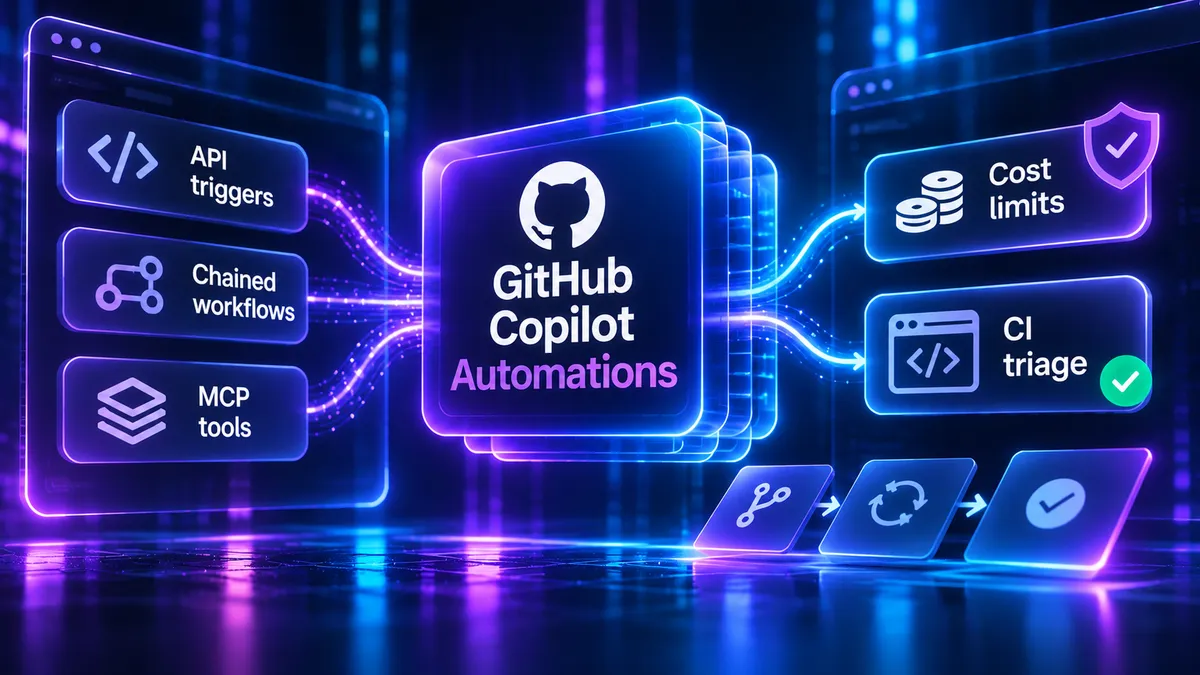
GitHub expanded Copilot Automations on October 28 with API-based triggers for external services, 24 more GitHub event triggers, and the ability to chain workflows when another automation succeeds or fails. The tool picker now includes 20 additional GitHub actions and selected tools from custom MCP servers. Teams can set AI credit ceilings per run, day, week or month.
An external monitoring alert can therefore start an investigation instead of waiting for somebody to open Copilot manually. GitHub separately introduced Copilot Projects in public preview for coordinating multiple agents across shared project context. It also expanded AI-specific security detection, although that scanning preview has separate licensing requirements. These are distinct products, not a single free security-and-automation bundle.
Why a small team cares
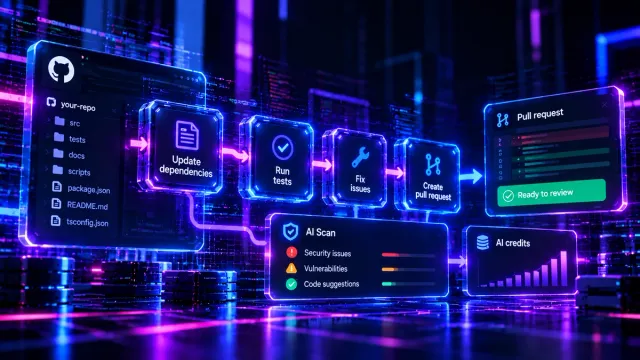
Picture a two-person SaaS company where the nightly build fails after a dependency update. One developer currently spends half an hour reading logs and reproducing the failure before deciding whether to roll back. An automation could collect the relevant run details, inspect a recent change and attach a proposed diagnosis to an issue before the developer starts work.
That saves time only if the investigation is substantially right. A confident but wrong explanation can waste more time than a raw alert. External MCP connections also enlarge the blast radius: an investigation tool needs access to error logs, not the ability to delete deployments, edit payment settings or merge pull requests.
The credit limits are the most immediately practical addition. Event-driven workflows can otherwise run repeatedly during noisy incidents, turning an operational problem into an unpredictable model bill.
Hype vs useful
Autonomous maintenance sounds appealing, but there is no evidence from GitHub's announcement that an unattended agent consistently resolves production incidents in a particular small codebase. Chained workflows can multiply mistakes just as easily as they multiply useful work.
I would judge the result on diagnosis accuracy, the time required to accept or reject the explanation, and total AI credits consumed. Require a developer to approve code changes. Copilot Projects may help larger cross-repository jobs later, while AI security scanning needs its own eligibility and cost decision. A reliable failure summary is enough to justify an initial test.