What actually happened
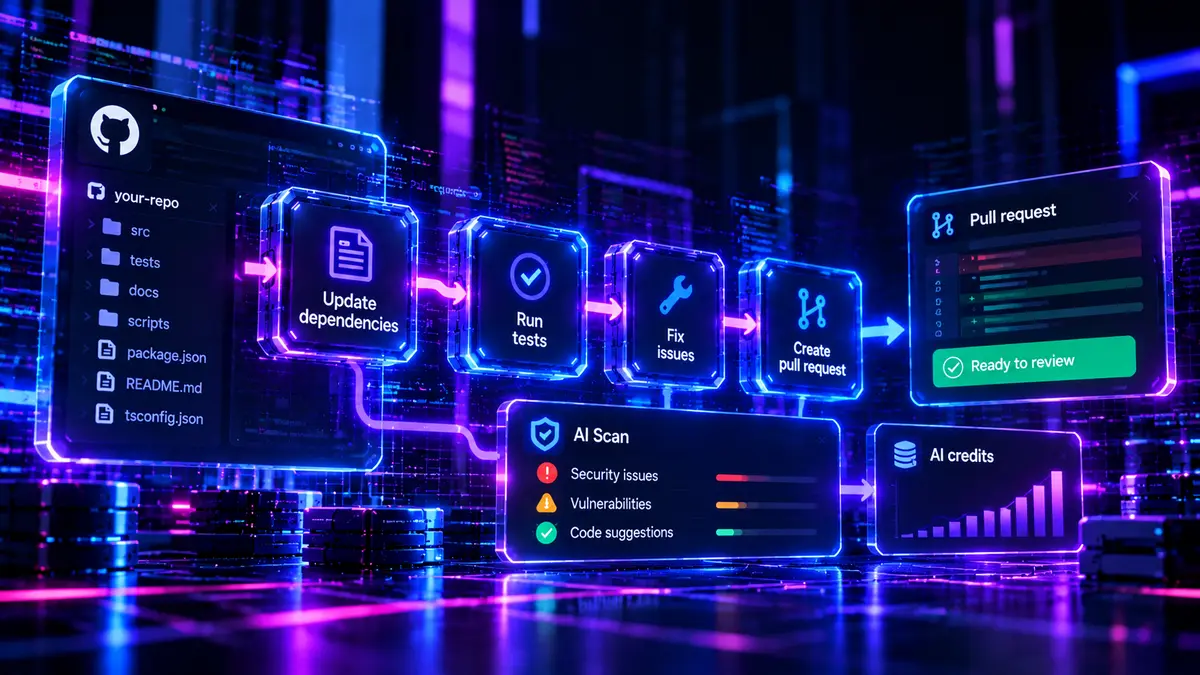
On October 28 GitHub made Agentic Workflows generally available. Developers describe recurring work in Markdown, and the system compiles it into GitHub Actions. Supported use cases include issue triage, CI failure analysis, documentation updates and test writing. Agents run with read-only permissions by default, sandbox and firewall protections, validation of outputs and threat detection for proposed changes.
GitHub also placed full-repository AI Scan into public preview. The scanner can look for vulnerabilities beyond changed pull-request lines and display findings alongside CodeQL alerts. Public repositories are eligible under the stated conditions; organization-owned private and internal repositories require GitHub Code Security or Advanced Security. Private repositories owned by personal accounts are not supported. Scans consume Code Security AI credits.
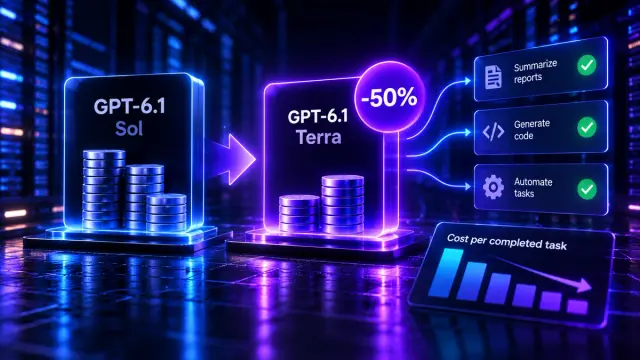
Copilot Fusion is now generally available too. Instead of manually choosing a model, developers select Standard, High or Max effort and let Copilot route or coordinate models. GitHub describes a temporary discount for paid-plan usage; published workload benchmarks should not be mistaken for guaranteed savings.
Why a small team cares
Consider a small product team operating several SaaS repositories. Failed builds, dependency changes, test coverage and security reviews all compete with feature delivery. An agent that explains a CI failure and prepares a proposed fix can shorten the time between a red build and a useful developer decision.
The review boundary matters more than the demonstration. Maintenance agents can misread logs, produce unnecessary edits or create recurring credit charges. Keeping an initial workflow read-only lets the team measure useful triage without giving it authority to merge or ship production changes.
Repository-wide security scanning adds another inspection pass, particularly for code outside recent pull requests. It does not replace dependency tracking, CodeQL or human review. Findings need validation, prioritization and a fresh scan after remediation.
Hype vs useful
The promise of autonomous maintenance sounds like a free extra engineer. It is not. The useful unit is engineering time saved after accounting for agent runtime, review and erroneous fixes. GitHub’s own performance and customer anecdotes do not establish results in a small team’s codebase.
I would start where the output is easy to judge: a summary of why CI failed, with links to evidence and no permission to change production. After several successful runs, proposing a pull request becomes reasonable. Fusion and AI Scan are separate cost and quality experiments, not prerequisites for getting value from the workflow.