What shipped
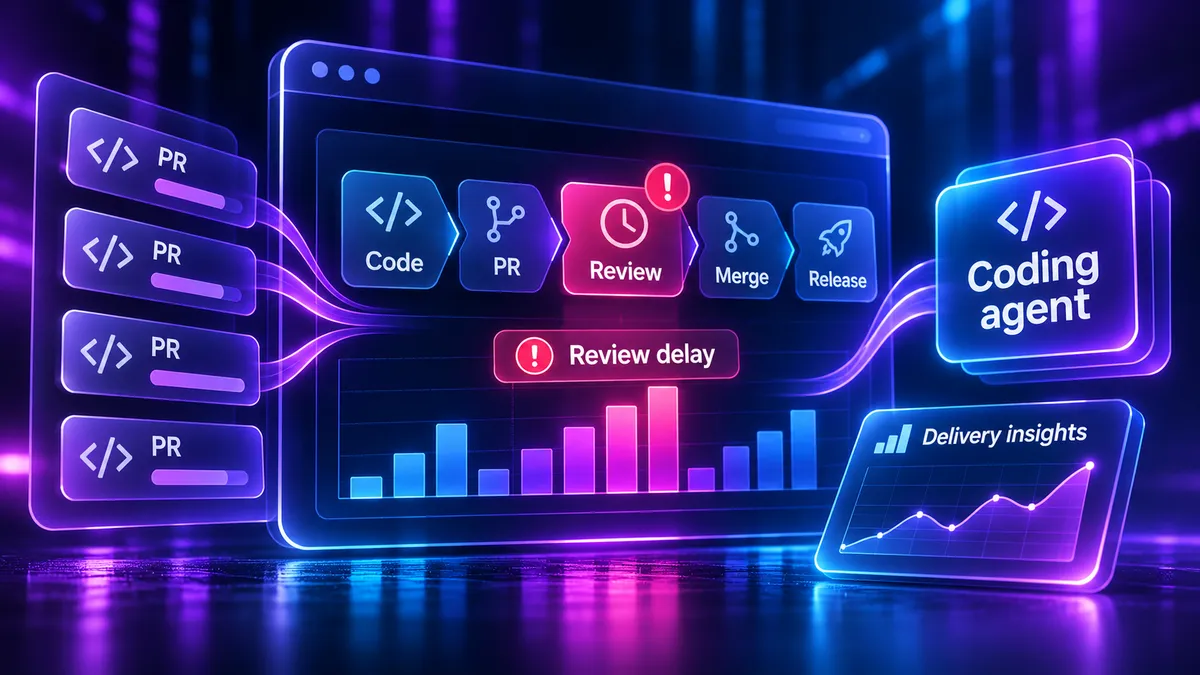
LinearB launched Agentic Studio on November 2, making its engineering delivery data available through a conversational interface. Existing customers can enable it and ask questions such as where code review is getting stuck, then inspect the figures and charts behind the answer. It can also build custom metrics and expose engineering context to tools such as Claude through MCP.
That context covers Git activity, ownership, prior incidents and work moving from a ticket through review and release. LinearB also announced an agent skill that adjusts how much effort a coding agent applies based on task risk and complexity. Agentic Studio is available to customers now; that effort-based agent skill is still in early access.
LinearB's own benchmarks report that agent-opened pull requests can wait more than five times longer for review and that AI-assisted pull requests were 2.6 times larger at the 75th percentile. Those figures describe its study population, not an outcome any one team should expect.
Why a small team cares
Consider a five-developer SaaS team using coding agents for maintenance. Agents can produce more branches and pull requests, yet releases still depend on humans understanding the change, reviewing it and handling production regressions. If the review queue grows, adding another agent may make delivery slower rather than faster.
A useful measurement starts with completed work, not generated code. Track the time from a pull request being ready to its approval, the number of features actually released and defects discovered after deployment. Those three measures show whether the coding assistant is helping the customer-facing product move forward.
Agentic Studio is interesting when it already has the history to identify a bottleneck. A manager could ask whether review delays cluster around particular repositories, owners or days. For an established LinearB customer, that is a reasonable same-day experiment instead of another dashboard-building project.
Hype vs useful
The product's value claim is plausible, but it is still a vendor claim. Agent output does not automatically equal faster delivery, and LinearB's customer case studies do not establish the return for a five-person team. The early-access skill also should not be treated as a production-proven autonomous release controller.
If you already pay for LinearB, test one question against real pull-request history and check the answer with the engineers who own that work. If your team has no engineering analytics budget, start with the activity and incident records in GitHub or your existing issue tracker. Buy additional analysis only after it identifies a decision you could not make with those tools.