What actually happened
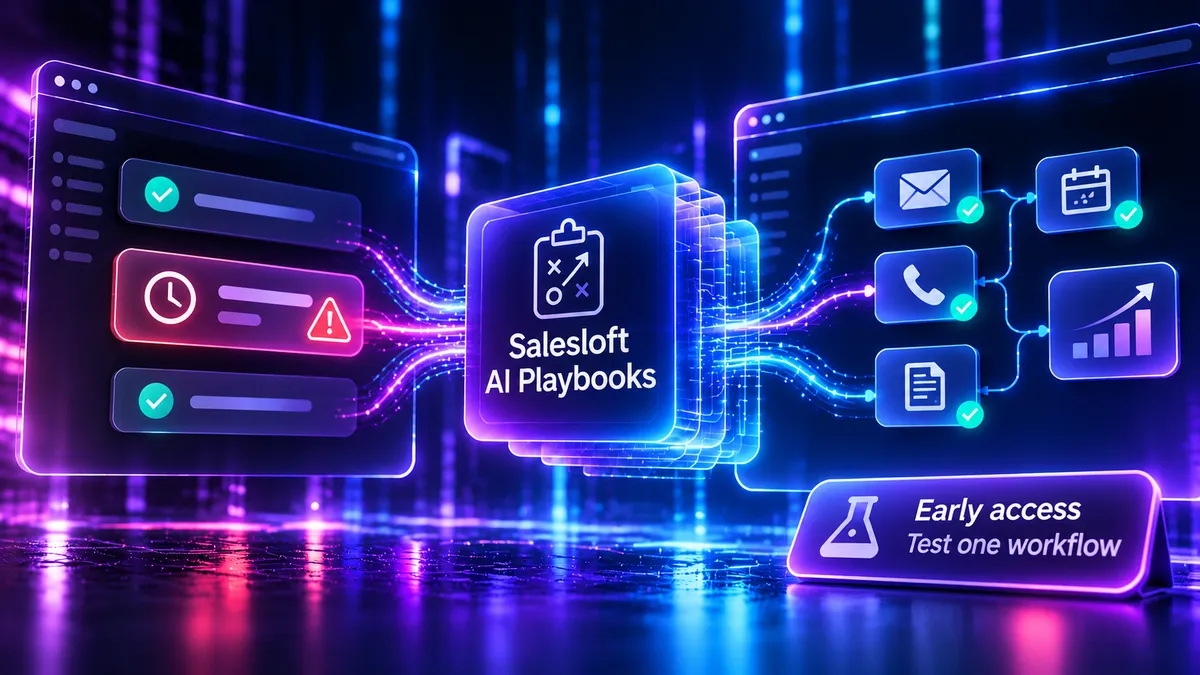
Salesloft announced Agentic Playbook on October 27 as a way to connect sales signals, pipeline risks and AI-driven actions. Revenue teams can describe sales plays in natural language, set guardrails and coordinate agents around objectives such as re-engaging inactive accounts. Human review can be required at critical steps.
The wider announcement also includes AI-powered analytics through Ask Salesloft, automated meeting preparation and live sales guidance during Zoom calls. Crucially, Salesloft says Agentic Playbook, AI analytics and the meeting-preparation features are entering early access. They are not confirmed as generally available to every customer.
Why a small team cares
Imagine a small lead-generation agency with a CRM full of prospects who stopped responding after an initial proposal. Some are genuinely inactive. Others may be visiting product pages or engaging with new content, but nobody checks these signals consistently. A narrowly configured playbook could flag renewed interest, prepare context and suggest a relevant follow-up.
That is worth testing only when the outreach is based on accurate records. A mistaken buying signal or stale contact detail makes personalization worse, not better. For a small team, approvals before sending messages or changing deal stages are a sensible control. The initial win would be a better-timed conversation, not more automated emails.
Measure whether a small test cohort produces more qualified replies and booked calls than a comparable manual process. Also record how long a salesperson spends checking the AI's evidence and rewriting its drafts. If review consumes the time supposedly saved, the workflow is not ready to expand.
Hype vs useful
Salesloft positions the announcement as progress toward an agentic revenue system, but it has not established that these features improve conversion for small agencies in production. Early-access availability, configuration requirements and any additional pricing need to be checked with the vendor.
The useful question is whether one specific trigger reliably leads to a better next action. Avoid letting multiple agents run unattended across the entire pipeline. A small approval-gated reactivation test can show the operational value without putting client relationships at risk.