What actually happened
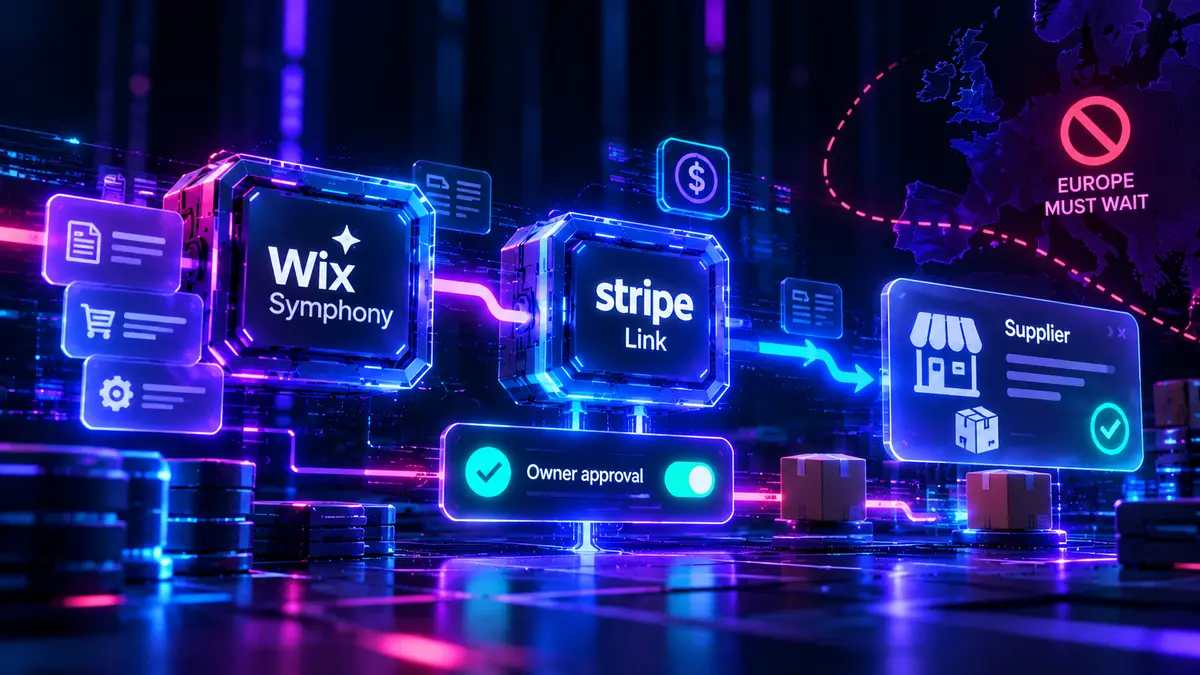
Wix Symphony announced an integration with Stripe's Link wallet for agents on 15 October 2026. The announced capability allows AI agents to initiate purchases for small businesses, with the owner approving transactions through WhatsApp or SMS.
The examples include supplier payments, inventory reorders and service purchases. The announcement describes limited authorization tokens or virtual cards as ways to constrain payment access. Initial availability is aimed at US-based Link accounts transacting in US dollars.
This is an announced integration, not evidence that autonomous purchasing is ready for every Wix customer or every country. The distinction matters because a payment workflow depends on regional support, merchant acceptance and the permissions actually available to the business.
Why a small team cares
Consider a small retailer that buys packaging materials every two weeks. Someone checks remaining stock, finds the usual supplier, prepares an order and pays the invoice. None of those tasks is especially difficult, but repeated interruptions add up.
An agent could monitor stock against a reorder threshold, select an approved supplier and prepare the purchase. The owner would receive a message showing the supplier, quantity and amount, then authorize the transaction. If the workflow is reliable, the business spends less time on routine procurement and is less likely to run out of essential supplies.
The value comes from eliminating handoffs while retaining accountability. A sensible implementation still needs a purchase record, matching invoices and a way to handle failed payments, refunds and incorrect orders. Otherwise the time saved on ordering can disappear into bookkeeping and dispute resolution.
Hype vs useful
The headline that agents can spend company money sounds more dramatic than the immediate benefit. Small businesses do not need unrestricted autonomous purchasing. They need a predictable workflow that prepares correct orders and makes approvals quick.
A WhatsApp approval message alone is not a purchasing policy. The business should know which suppliers are allowed, which categories can be purchased, who can approve and what happens when an amount exceeds its limit. The underlying payment controls must enforce those rules rather than trusting the agent's instructions.
For a European business, the rollout is primarily a signal of where agent automation is heading. Building a complete Stripe-based purchasing integration before regional availability and real controls are clear would be premature. Preparing the upstream order workflow is useful now, and it remains useful even if this particular integration never becomes the preferred payment method.